Up to 84% of hotel bookings drop off mid-checkout. Mobile friction, confusing 3DS step-ups, no wallets, slow forms — guests leave for the OTA next door.
Every guest. Every outlet.
Every euro, finally accounted for.
The payments platform behind Vila Galé and 40+ partner properties. One dashboard across the front desk, restaurant, bar, spa and room service — without ripping out the PMS you already run.
Your busiest night
is your leakiest.
Hotels lose more revenue at the payment layer than at the breakfast buffet. Most never see it because nobody's measuring — until a CFO joins. Here's what the cohort average looks like, in real time.
Aggregate hospitality industry estimate — declined cards, abandoned baskets, friendly fraud and FX bleed, distributed across the cohort per second. Your share depends on volume, mix and current provider.
60% decline rate in LATAM corridors. International cards hitting domestic acquirers, no local routing, no fallback. Each decline is a guest who walks.
Friendly fraud, no-shows and disputes consume up to 4.6% of LATAM hotel revenue. The disputes you don't win are usually the ones nobody documented.
Up to 15% extra in fees and FX swings on cross-border bookings. Refunds at the wrong exchange rate erode margin and trigger chargebacks from confused guests.
Stop measuring it. Start fixing it. Every section below is one of the four leaks, closed.
Map your own leaks · 15 min The whole hotel.
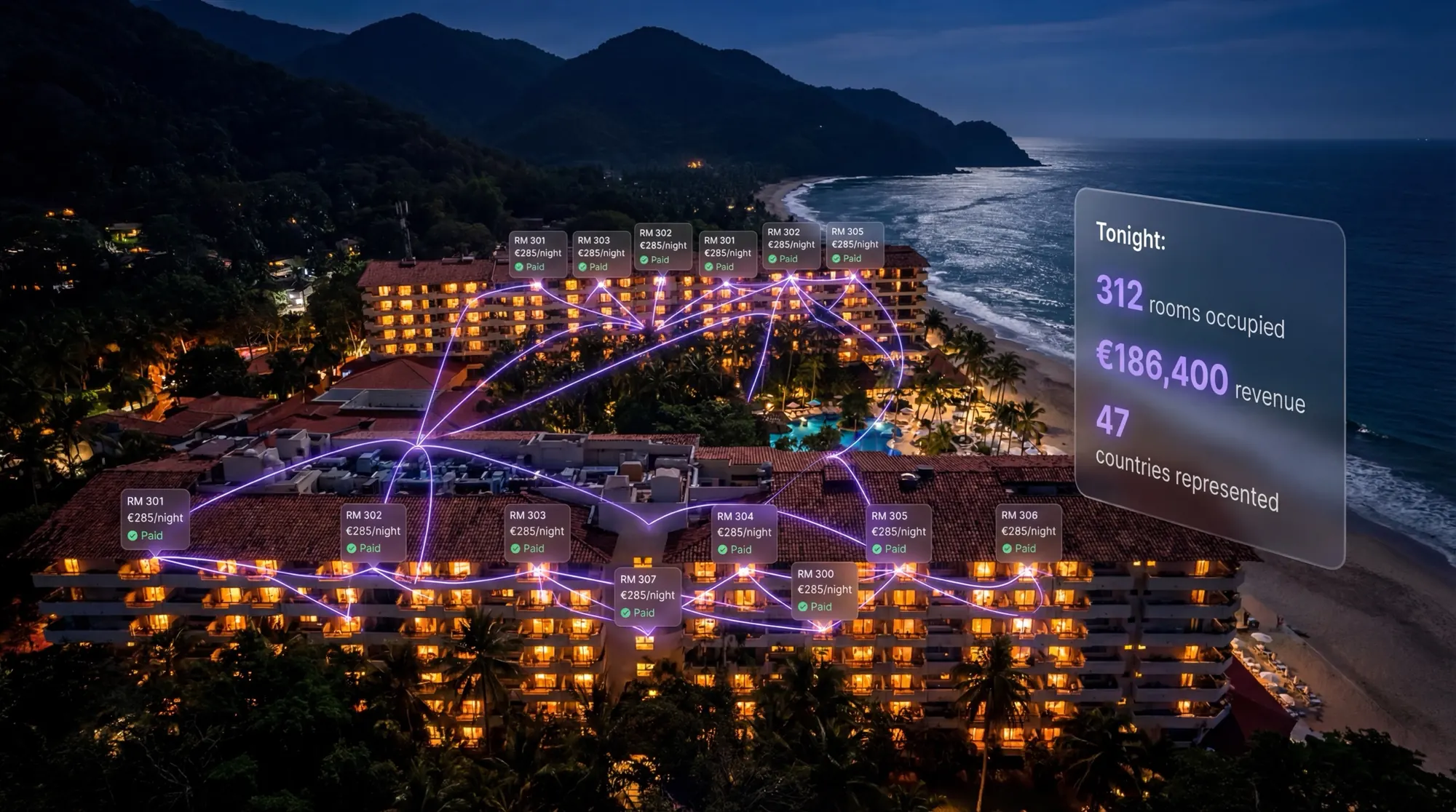
On one screen.
Restaurant. Spa. Bar. Front desk. Room service. Every charge from every guest, in front of you in real time — without opening five different systems or chasing reports the next morning.
From the booking screen
to the closing folio.
Six moments where most hotels lose money or guests. Click any — Paybyrd does each of them quietly, while your team keeps doing what hotels do best.
One-click checkout
Apple Pay, Google Pay, MB WAY, pre-tokenised cards. Conversion lifts 18–24% over the legacy hosted form.
Free your team
with a QR code.
Quivi is Europe's all-in-one POS, payments and AI — built for hospitality. Guests order and pay from their phone. Your kitchen gets the ticket instantly. Your front desk gets the payment automatically. One contract covers it all, including hardware.
Quivi is part of the Paybyrd group — same engineering team, same support, same contract. No vendor handoff, ever.
Guest scans the QR at the table
No app to install — camera opens the menu instantly.
Menu loads · live availability
86'd items hide. Allergens, photos, upsells inline.
Split per person · tip pre-suggested
Three friends, three Apple Pays, one tap each.
Paid · KDS pinged · invoice issued
Order goes straight to the kitchen. Folio updates. Table closes itself.
Replace five tools with one.
Built for hospitality, not retrofitted.
QR ordering, bill split, smart tips
Guests order, split, tip and pay from their phone. No app. No extra staff.
Cloud POS · KDS · floor plans
Menu builder, kitchen display, staff management, real-time analytics. Learn in minutes.
AI menu builder
"Create a lunch menu with 3 starters, 4 mains, 2 desserts at €15." Quivi does the rest.
AI reservations on WhatsApp
24/7 reservation agent. Confirms bookings, slashes no-shows, never sleeps.
Branded delivery website
Zero commission. Your brand, your customers, your data. Plugs into Glovo, Uber Eats, Bolt Food.
Auto Google reviews
Every paying guest gets a review prompt. Reputation grows on autopilot.
QR ordering at peak hours changed our throughput. We served 40% more customers without hiring more staff.
Four shapes for every part of the property.
Same Quivi software on every one of them.
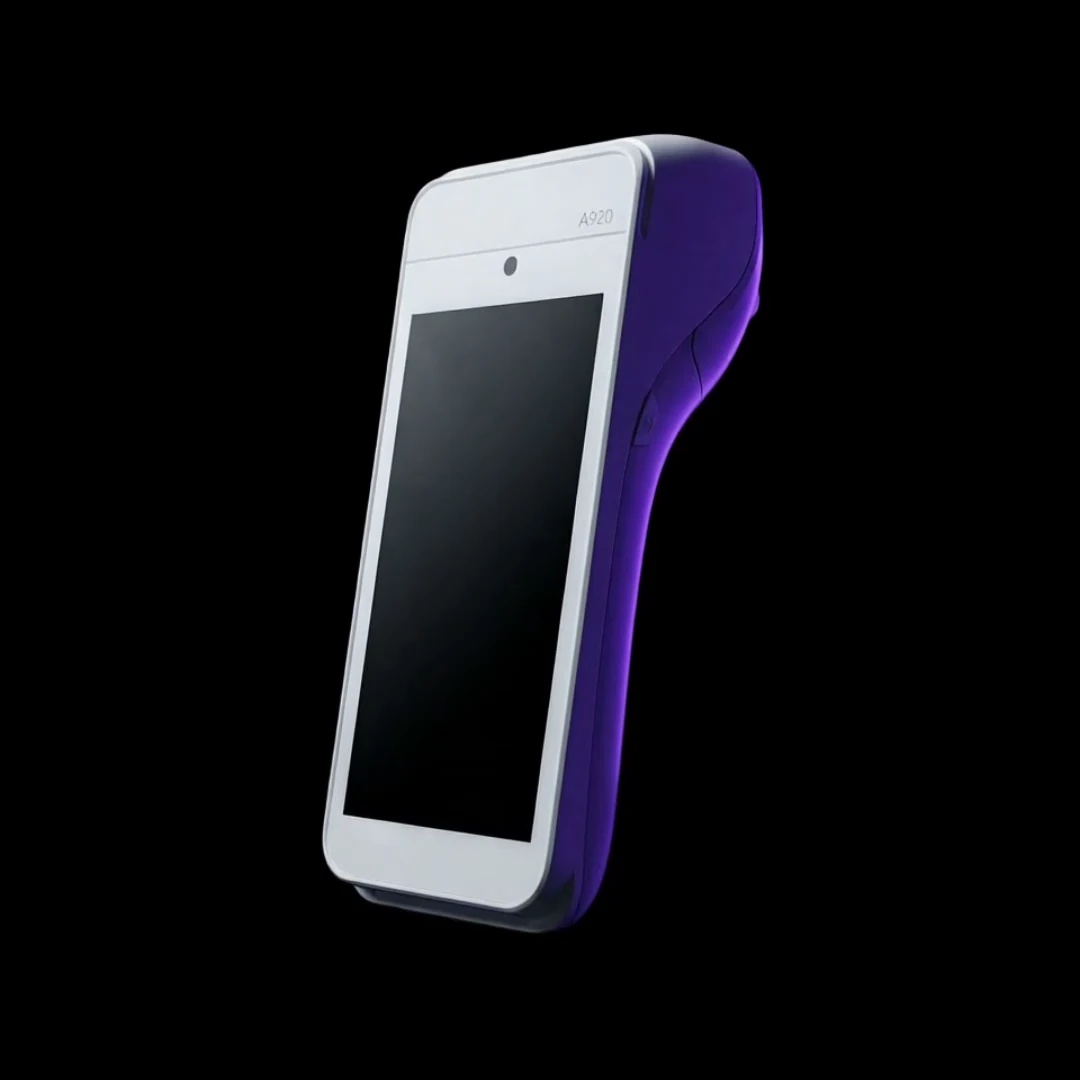
Renegade
Portable — tableside & poolside
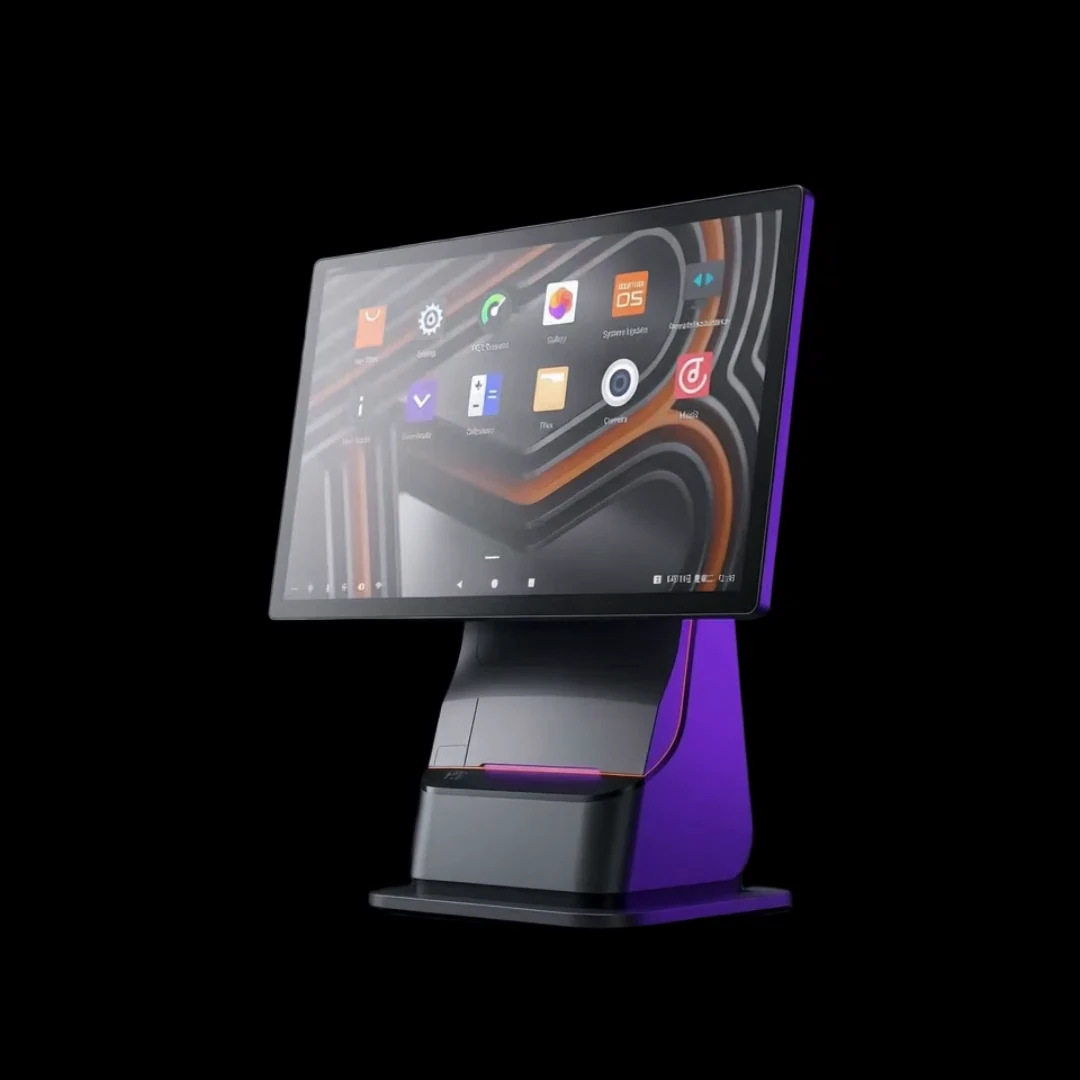
Rawhide
Countertop — front desk & restaurant
Maverick
All-in-one — ordering + payment
Titan
Self-service — kiosk & unattended
Two AI agents.
Working while everyone sleeps.
One sells the late checkout in WhatsApp at 02:00. The other blocks the card-tester at 03:14. Neither needs a desk, a manager, or a coffee break — and together they recovered €420,000 across the cohort last quarter.
The concierge that closes
The shift that never sleeps
Three levers your CFO
will read out loud at the board.
Approval lift recovers what was always yours. Surcharge transfers cost where it's legal to. DCC turns FX swings into margin. Three boring numbers, all rolling up to the same line.
+3.12%
approved cards reclaimed.
Multi-acquiring + smart routing + network tokenisation + local-acquired cross-border. Every BIN goes to the acquirer most likely to approve it. Aggregated from Vila Galé and three confidential European hotel groups vs. their prior provider.
€4M–€7M
recovered in year one.
For a hotel group processing €2B annually with ~35% of volume in surchargeable corridors. Disclosed to the cardholder, capped at brand limits, carved out by BIN where required. We surface the lever — you decide where to pull it.
Up to 80%
of DCC margin to you.
Most providers keep the dynamic-currency-conversion margin and call it "service". We treat it as your money. Up to 80% revenue share back to the hotel — turning every cross-border guest into a margin event instead of an FX exposure.
We slot in beside your PMS.
Not over it.
You spent eighteen months getting Opera, Mews or Protel exactly right. You're not redoing that. We integrate next to it — and we measure go-live in days, not project quarters.
Sandbox
Test merchant ID, API keys, sandbox PMS connector
First tx
Live in test env · first €1.00 round-trip captured
Pilot
One property, parallel processing · diff vs incumbent daily
Cutover
Full property live · folio, reconciliation, refunds, all ours
- Opera Cloud
- Mews
- Protel
- Cloudbeds
- Apaleo
- RoomRaccoon
- Quivi (native)
- Zonesoft
- Winrest
- Moloni
- Vendus
- Booking.com
- Expedia
- SiteMinder
- Pegasus
- Hotelbeds
- SAP
- NetSuite
- Sage
- Xero
- QuickBooks
Before Paybyrd we were juggling multiple systems, dealing with high fraud, chargebacks, and clunky checkout flows. Now everything's unified — from online bookings to front desk to POS — with a single platform that just works. Our teams didn't need to learn anything new because Paybyrd is fully embedded into the systems we already use.
What hotel groups ask
before they migrate.
Direct answers from the engineers who built the stack behind Vila Galé. Every answer names a number, a system, or a runbook step. If something's missing, a human is one message away.
Can we surcharge guests in markets where it's legal to offset card cost?
Yes — and for hospitality groups with US, Australian, or LATAM property exposure, it's the highest-leverage line item we offer. Paybyrd's surcharge engine adds a fully-disclosed, configurable fee to the cardholder at checkout in markets where surcharging is permitted. It respects card-brand caps, regional regulatory limits, BIN-level carve-outs (debit, prepaid usually excluded), and your own property-by-property policy. Disclosure copy is generated automatically per jurisdiction. For a group processing €2B annually with ~35% of volume in surchargeable corridors, this typically recovers €4M–€7M of merchant-discount cost in year one.
How is the +3.12% approval uplift actually delivered?
Three layers stacked. (1) Multi-acquiring with smart routing — every BIN goes to the acquirer most likely to approve it, on a live decision graph fed by your historical data. (2) Network tokenisation on Visa, Mastercard, Amex — much higher lifetime success on stored credentials, which matters for returning guests and pre-authed deposits. (3) Local-acquired cross-border — a Tokyo card hits a Tokyo issuer, not a remote US acquirer. Like-for-like vs named providers: +1.72% vs Adyen, +3.16% vs Elavon, +4.86% vs Checkout.com, +4.92% vs Nuvei. Cohort blended: +3.12 pp.
What's the pricing model — interchange++ or blended?
Interchange-plus by default with full per-rail visibility — interchange, scheme fee, gateway, acquirer margin all itemised. Blended rates available for groups that prefer predictability. Network token economics, DCC margin (up to 80% back to you), and any surcharge revenue are revenue-shared transparently. No padded markups, no surprise quarter-end true-ups.
What about DCC — do hotels actually keep meaningful margin?
Yes — up to 80% of the dynamic-currency-conversion margin flows back to the property. Most providers keep this and call it a service. We treat it as your money. For a resort with heavy international guest mix, this alone often offsets a meaningful chunk of card-acceptance cost.
Will we have to rip out our PMS?
No. Paybyrd integrates beside Opera Cloud, Mews, Protel, Cloudbeds, Apaleo and others — never over them. Folio postings, pre-auths, refunds and reconciliation flow into your PMS through certified connectors. Your operations team learns nothing new because the screens they use today don't change.
What does migration actually look like for a multi-property group?
We don't ask you to flip a switch across the portfolio. Day 1: sandbox certified, test merchant ID issued, integrations team paired with yours. Day 4: first €1.00 round-trip captured in test. Week 2: one property pilot, parallel processing, daily diff reports vs your incumbent. Week 4: full property cutover with rollback in your hands. Vila Galé's first property went from contract to live in 22 days using exactly this runbook; subsequent properties roll out in days, not weeks.
Can we self-host modules in regulated markets like Brazil or Angola?
Yes. Select Paybyrd modules — gateway, vault, decisioning engine — run in your cloud or behind your VPC for jurisdictions where data residency or local regulator policy demands it. We've deployed self-hosted gateways in Brazilian, Angolan and EU markets with local data-processor requirements. Same APIs, same dashboards, your infrastructure, your audit trail.
What about local payment methods — MB WAY, PIX, Boleto, OXXO, iDEAL?
All supported and pre-certified. 192+ currencies, every major APM in EU / LATAM / APAC. Missing one for a market you're entering? Tell us — we've added 11 new methods in the last 18 months, mostly on merchant request. Adding a method later is a flag-flip on your side, not a re-integration.
How do you reduce chargebacks for hotels specifically?
Friendly fraud ("I never stayed", "the spa charge isn't mine") is the hotel-specific killer. We attack it three ways: AI velocity scoring before authorisation; 3DS2 step-up that shifts liability to the issuer; and airtight folio documentation that auto-generates rebut packets when a dispute lands. Hospitality cohort sees ~−16.8% chargeback volume in the first two quarters — and a measurable lift in win-rate on the disputes that do reach representment.
How do you handle pre-authorisations and debit-card freezes?
Soft-hold pre-auths via direct issuer connectivity. Guests see the amount, the duration, and the release date in their app and on the receipt — no support tickets, no debit-card freeze drama. Releases post in seconds for most EU issuers. The most common front-desk argument disappears.
What happens when a guest disputes a folio charge from the bar at 11pm?
Two things. First, the folio line carries the timestamp, the terminal ID, and the staff handle — so the night manager can verify in seconds, not next morning. Second, if the guest insists, we issue an instant refund with an ARN reference before they leave the lobby. The chargeback never happens because the dispute was resolved at the source.
Reconciliation is a nightmare in hotels. What changes?
Gross settlement model. One daily payout, fully itemised by property, outlet, shift, SKU and channel. AI-generated reports run ad-hoc — "show me the spa's Mastercard volume yesterday between 14:00 and 18:00" returns in seconds. No CSV exports, no manual matching against bank statements, no month-end horror.
What's your SLA, and who answers when something breaks at 03:00?
99.999% platform uptime, contractually backed with credits. Named technical account manager from day one — not a ticket queue. Multi-property groups get a dedicated Slack channel with our SRE on-call. Sub-200ms automatic failover to a hot-standby region. When something breaks at 3am, you talk to the engineer who built the thing.
Open the door to ambition.
Unify your payments.
Fifteen minutes with a payment engineer — no SDRs, no slide decks. We'll map your outlets to the right mix of methods, run a live benchmark against your current provider, and have a sandbox in your inbox by tomorrow.